
Summer is the best season for lunch
in the balcony floating on the Seine
River gives its breeze to the heat
and the ardent gazes between youths
Wines and fruits are no longer needed
Summer is the best season for lunch
in the balcony floating on the Seine
River gives its breeze to the heat
and the ardent gazes between youths
Wines and fruits are no longer needed
Worry wears layered clothing, so that
if she accidentally flies to
Greenland or Indonesia,
she is still warm, chill and fashionable.
Worry smells like Big Mac burger.
You make coffee for me every morning.
You don’t know me.
My heart pounds when you
gaze at me, no caffeine ever needed.
You call from work, to say you miss me.
You think you are good at loving,
Until the world falls apart when
No one dares to call your name loudly.
Hands on the ground you crawl to reach
Upon people’s feet, begging "let me
Kiwifruits march in formation
with camouflage of loss and anger,
with iron of target and eager.
Jungle is frigidly waiting while
silence is the only setting.
Once upon a time, there was an old, retired hunter living in his hermitage.
One day, a tiger came for him. "Our forest is occupied," the tiger said, "please help us. All we want is a place that everyone could live equally."
"Why me?" The old hunter hesitated.
"All other hunters were defeated. You are our only hope." The tiger begged.
"What should I do?" The hunter asked.
After my wife passed away six months ago, I tried to keep myself busy. But somehow I just couldn't forget about her. I couldn’t move on.
I went on a business trip to Philadelphia. My wife loved art but I didn't, so I never went to a museum with her before. This time I decided to go to the Philadelphia Museum of Art, one of the places she always mentioned that she wanted to go with me.
I wandered around the museum, eventually making my way to a rounded square with exhibits from many famous painters: Van Gogh, Monet, Cezanne..., well, I must admit I didn't know much about them and actually, I wasn't interested at all. When I was about to leave, I saw a Renoir painting of a knitting woman. She looked exactly like my wife. I was stunned. I stood in front of it and stared at her all afternoon.
After I went back home, I couldn't get rid of that painting. I searched for photos of it online, bought art books and posters of it. But none of them gave me the feeling like that original piece. Even my wife's own photos didn't. I felt there was something inside that painting. I felt there was a soul.
I quit my job in California, found a part-time work and moved to Philadelphia. I went to the museum every weekend, doing nothing but staring at that painting, at her.
I long to see my first love story. It was in my 8th grade when I fell in love with the most good-looking boy in the class. When I say "see" I I really mean it. I want to go back to the past and watch the whole scenes like a theatre audience. I want to stand in the school hallway right beside him and the younger me and listen to him saying "I like you"; I want to walk with me and him when we had our first date in a bookstore, maybe try to pick a lovely bookmark with secret messages on it, and slip it into the boring gift I bought him; I want to be at my house, watch him kiss me the very first time, and whisper to myself "kiss him back you fool!" ; I want to be on the street that night, witness the stupid me saying sorry to him again and again because she kissed another boy. And maybe slap the younger me on the face, then cry with both of them. I think I long not just to see my first love story. I long to stop it. To change it. To start all over again and laugh in the end. But none of these I can do. I can't even "just" see. I long to see...

In these four chapters there are three of them continue discuss about knowing the audience of the Health Literacy (HL), so I would keep using the same title this time.
Literacy
After reading this chapter I really think that the author should put it in the first chapter instead of the 21st.
The 2003 U.S. National Assessment for Adult Literacy (NAAL), which is the most recent and comprehensive measure, defines literacy as using “printed and written information to function in society, to achieve one’s goals, and to develop one’s knowledge and potential”. There are three type of literacy within it: prose literacy, document literacy, and quantitative literacy. And there are four levels of literacy: below basic, basic, intermediate, and proficient. Here is the research result of each literacy and level:
Although I am still trying to title every article, when each contains four chapters it’s actually a lot more than that. But I think this is also a way of summarizing my reading, so I will keep doing this.
I always think that literacy is cultural, and it presents in many elements, such as media, writing and attitude. In the field of Health Literacy (HL) it’s even more obvious. Since we are living in this melting pot, many times the word “cultural” is more “multicultural”.
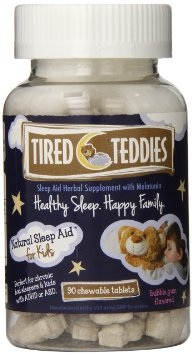
First, for example, the author discusses about media. Unlike the old days when most people learned about health from their doctors, today they are more from television, radio, websites, newspapers and magazines. The good side is people might be taught more health knowledge, but the bad side is they might be too panic about decease, have too high of expectation toward treatment—one famous study is that in TV shows the success rate of CPR, about 55%, is actually much higher than in real life, about 10%—, or get pursued by ads to buy medicine they don’t need. Another example the author points out is that “the picture of a cute teddy bear or sleeping baby on the label of children’s medication may encourage parents to buy it”.
As one “treatment”, the author introduce a website called Health News Review that uses stringent criteria to grade health stories on a scale of 1 to 5.
Second, the author discusses about words in HL, which include translation, jargon and acronyms. In the States, about 20% of the population speak a language other than English at home. The author suggests three points that could have ESL patients:
Although writing and reading seems to be the “traditional” elements of literacy in the modern fields such as health and media, undeniably, they are still one of the most important things in health literacy (HL), as well the complicated things.
In these four chapters the author talks mainly about the writing materials of HL. First, unlike the literature or journal paper, these “practical” writing requires different skills, ideas and perspectives. Usually, printed and Web materials not only need to be written clearly and simply, they also should be designed in ways that readers find inviting and appealing. This kind of “information design” refers to the art of doing, for example, combining words and images to encourage readers to start, and keep, reading.
This is exactly what a blog, or all other modern digital writing should pursue, because nowadays we are all, when writing online and seeking potential readers, “authors”. Therefore I think not only the health materials such as a Website or a pamphlet, but also a blog, an email and even a literature, when people look at a text that is confusing, they don't feel respect because they feel as though they are not “being talked to”, just “being talked at”. Writers should remember that reading isn’t just an intellectual cognitive activity, but also an emotional one, sometimes even toward the efferent texts. In this point of view, the writing of “information design” is more like an art, not a science, with lots of room for subjective judgement from both writers and readers.
However, this is not an easy task for writers. Health materials, whether it’s medical instructions or informed consent forms, always content difficult concepts. How to make it simple without omitting too many information, how to use easy words to explain hard terms, and how to present statistic numbers are all challenges. A good way to identify project goals is by asking yourself what readers should know, do, and feel after reading this document.
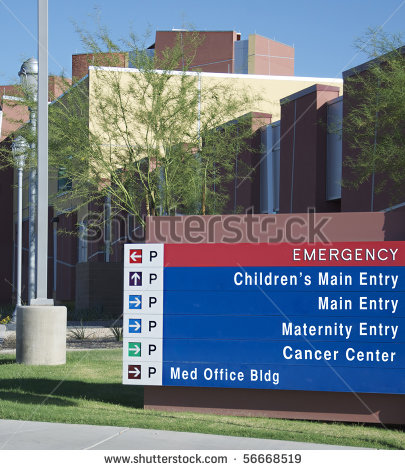
But not only documents that has writing. In clinical settings, there are signs everywhere. Even before you walk into a hospital you need to find the right “entrance”.